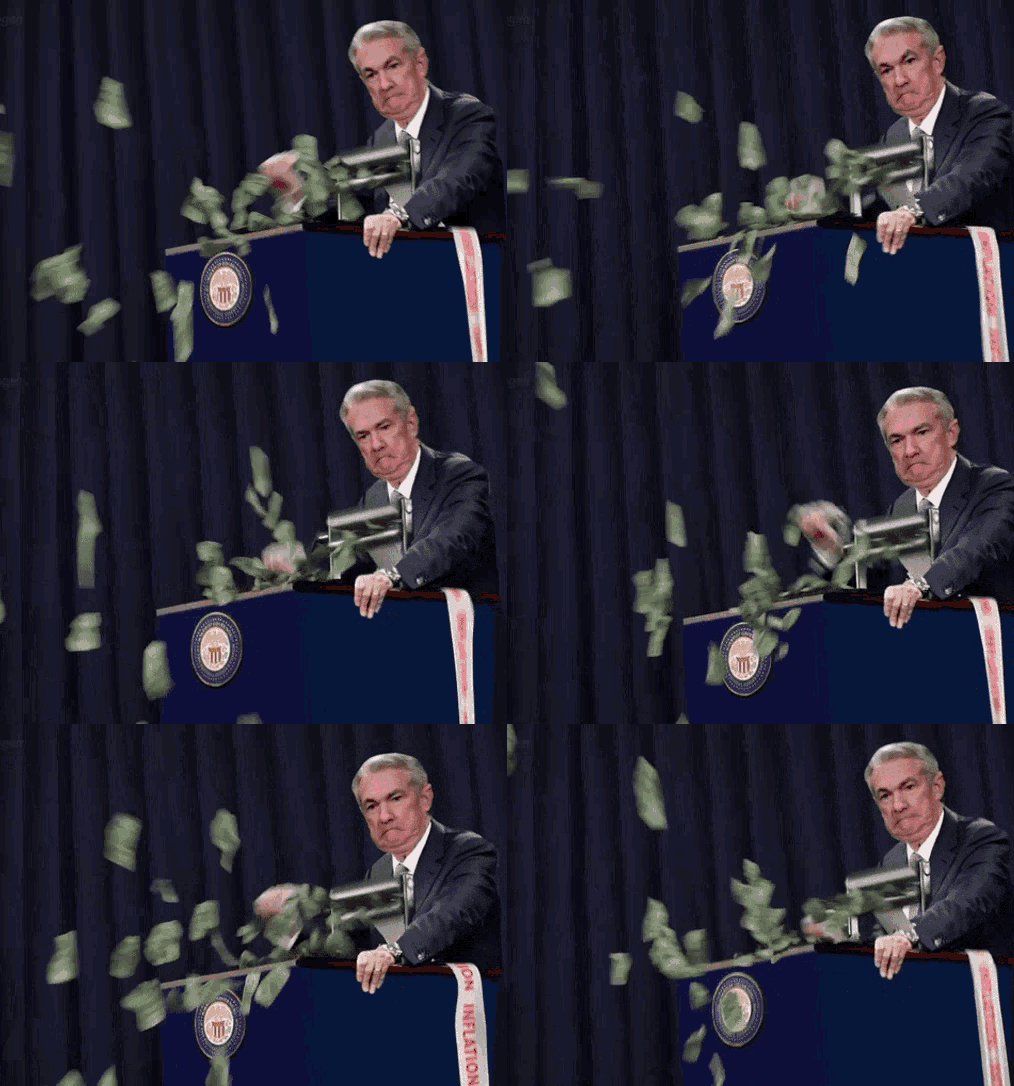
Jerome Printwell and his out of control money printer
Federal Reserve Chairman Jerome Printwell Struggles to Balance the Pressures of Mass Money Printing
In 2020, the Federal Reserve significantly increased the money supply in response to the economic crisis caused by the COVID-19 pandemic. Estimates suggest that around $3 trillion was created through a combination of asset purchases (quantitative easing) and emergency lending programs.
Printing large amounts of money can have significant downsides. One major risk is inflation, which occurs when the supply of money grows faster than the economy's ability to produce goods and services, eroding the purchasing power of currency and making everyday items more expensive.
Additionally, excess liquidity often fuels asset bubbles in markets like stocks, real estate, and cryptocurrencies, creating inflated prices that can eventually collapse and lead to financial instability. This approach also increases government debt, which can become unsustainable over time, raising borrowing costs and potentially triggering a debt crisis.
Furthermore, reckless money printing can undermine trust in the U.S. dollar as the world's reserve currency, weakening its global demand and financial credibility. While these measures may provide short-term relief, they often fail to address underlying economic problems, delaying necessary reforms and leaving the economy vulnerable in the long run.
"Money Printer Go Brrr" the meme of all memes. Exploded across the internet in March 2020, perfectly capturing public frustration with the Federal Reserve's unprecedented monetary expansion.
This meme has become a cultural phenomenon. it has spread across Reddit, Twitter/x, and financial forums, with everyone from retail investors to economists, celebrities, and even politicians referencing it.
Elon Musk engaged with variants of the meme, while it became a staple in cryptocurrency communities arguing for Bitcoin as a hedge against inflation. The phrase has been referenced millions of times across social media, spawning countless variations, merchandise, and even appearing in mainstream financial commentary.
As we approach the January 2026 Fed meeting, the meme remains remarkably relevant, serving as shorthand for ongoing debates about monetary policy, inflation concerns, and the long-term consequences of quantitative easing that continue to shape our economy today.
And now, a hedge against it all,.. $$$Brrr....